

Naitangpai × Dr. Xiaoji: Co‑creating New Experiences: Redefining Women’s Health Services

In an era of continuously evolving female consumer demands, offline retail spaces are undergoing a quiet transformation.
If the core value of a retail store in the past was to sell products, then in the future, it is likely to evolve into a gateway for lifestyle services.
Recently, the Guangzhou-based AI health-tech company Dr. Xiaoji visited the headquarters of the renowned scientific lingerie brand Naitangpai to host an “AI-Powered Breast Health Guardian” experience for the brand’s female employees.
This was not just a corporate employee wellness event, but also a real-world exploration of integrating “AI in Healthcare + Consumer Lifestyles.”
Through this initiative, a new model has begun to emerge—a “Shopfront & Wellness Suite” for women’s health management.
When “Scientific Lingerie” Meets AI Health Technology
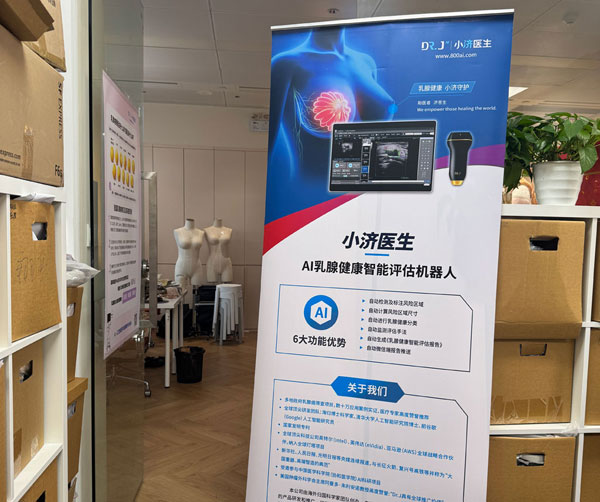
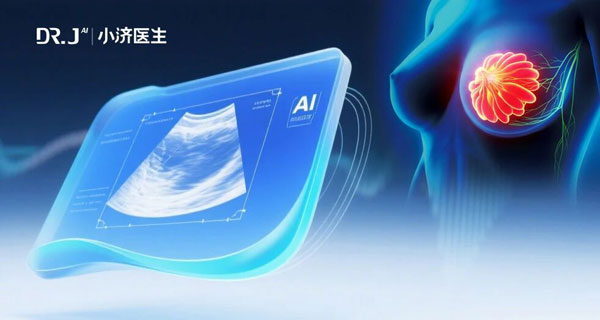
At the event, Dr. Xiaoji showcased its independently developed AI-powered Breast Health Assessment Robot.
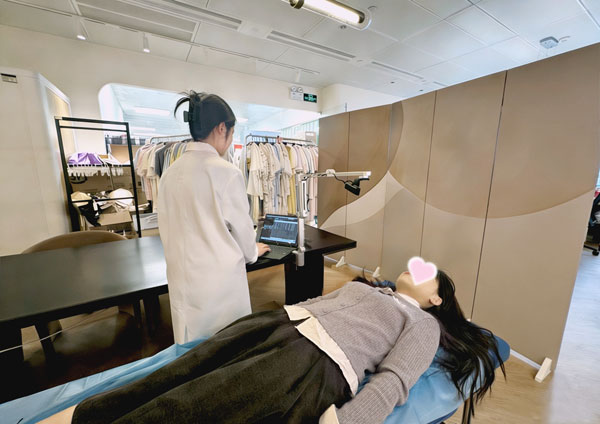
Through a process where a health consultant collects breast data, the AI system performs real-time quality control and cloud-based algorithmic analysis. This allows for a complete breast health assessment and a structured health report to be generated in a short amount of time.
For the participating team, the experience was powerfully intuitive: a health assessment that once required a visit to a professional medical facility could now potentially be integrated into everyday life.
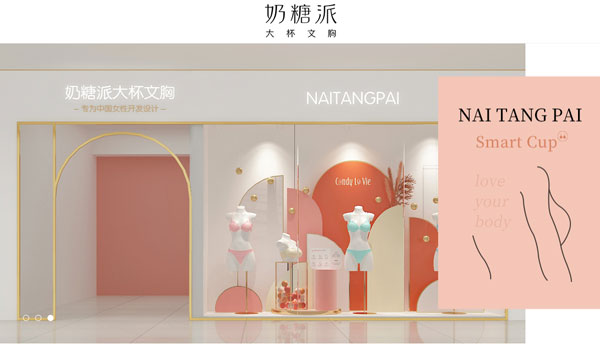
Naitangpai has long focused on the study of the female anatomy, providing more rational and comfortable lingerie solutions for busty women through scientific sizing and precise measurements.
Dr. Xiaoji, on the other hand, utilizes AI and ultrasound technology to make breast health assessments more standardized and scalable.
Conceptually, the two companies share a natural synergy:
- Naitangpai supports women’s physical structure with scientific design.
- Dr. Xiaoji guards women’s breast health with AI technology.
This combination of “external support + internal safeguarding” has opened up a broader discussion about new possibilities for women’s health service scenarios.
“Shopfront & Wellness Suite”: A New Possibility for Retail Space
Following the experience event, a fascinating concept was proposed.
What if the retail store of the future took on this form?
- The Shopfront: Customers receive body measurements and select lingerie, getting expert advice for a scientific fit.
- The Wellness Suite: In a private, discreet space, users can seamlessly complete a breast health assessment. If needed, they could also access targeted wellness and therapy services.
This model signifies a fundamental upgrade for retail spaces:
Stores would no longer be just points of sale, but could also become service nodes for women’s health management.
For the customer, the experience would feel completely natural: during a shopping trip, while trying on new clothes, she could also get a quick breast health check for added peace of mind.
This removes the stress of a clinical environment while still providing access to professional-grade health advice and follow-up services.
This model of “effortless health management” may well be the key to making preventative health services more widespread in the future.
Why is This Only Possible Today?
The idea of integrating health services into consumer spaces is not new.
The real obstacle has always been the heavy reliance on highly specialized professionals. Traditional ultrasound examinations require extensive experience, making them difficult to implement in a retail setting.
The emergence of AI technology has changed everything.
Dr. Xiaoji’s system deconstructs the complex ultrasound process into a standardized procedure through real-time quality control, operational guidance, and AI-powered analysis.
This means that with the assistance of an AI system, a trained health consultant can help a user complete a standardized scan, while the algorithm handles quality control and result analysis.
The technical complexity remains, but AI makes the service model replicable. Dependence on highly specialized professionals is reduced, allowing the application to extend from hospitals to out-of-clinic settings. For the first time, this creates a viable path for health management services to enter the consumer scene.
The Next Evolution of Female Consumer Spaces
In the world of female-focused consumer brands, many have already moved beyond competing on products alone.
True differentiation now comes from the depth of the service experience and the strength of customer relationships.
For established brands with strong female communities, having their stores double as health management nodes could be far more significant than a simple value-added service.
It is with this forward-thinking vision that Naitangpai and Dr. Xiaoji have launched this collaboration—to jointly explore the potential of this model and validate its effectiveness through pilot programs in stores.
A Final Word
The true value of many AI technologies is realized not when they remain concepts, but when they are used naturally in everyday life.
Women’s health management doesn’t have to be confined to hospitals.
When technology is mature enough, it can seamlessly integrate into the spaces where people live their daily lives.
Dr. Xiaoji has always believed: The best AI health technology should be close at hand when you need it.
And this exploration is, perhaps, just the beginning.